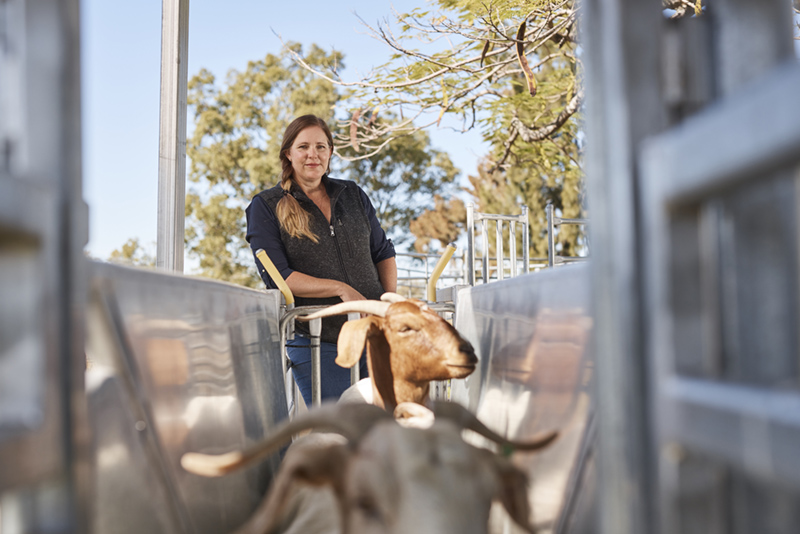
 Parasitologist Dr Anne Beasley is working to uncover practical, evidence‑backed solutions that help goats, and producers, thrive.
Watch out worms
As drench resistance continues to erode worm control effectiveness across Australia’s goat industry, researchers are developing practical solutions for producers to combat declining chemical performance.
Dr Anne Beasley – a parasitologist and Senior Lecturer in Animal Science and Production at The University of Queensland (UQ) – is working to understand producer awareness and adoption of non-chemical worm control strategies, to identify where knowledge gaps and practical barriers are holding the industry back.
Leading the research behind an MLA-funded project – the Watch-n-Worm workshop series – Anne aims to take what is known about parasite management options beyond drenching and turn it into evidence-based, producer-ready resources.
Understanding the challenge
Anne said many goat producers – especially those in high-rainfall regions – are facing a loss in profit and herd productivity due to the impacts of anthelmintic (drench) resistance.
“Producers invest significant time and money into drenching as an important part of maintaining herd health and welfare,” she said.
“But when resistance develops and drenches no longer provide the level of control producers expect, both the animals and the business feel the impact. Stock losses continue, and that investment of time and money is effectively undermined.”
While alternative parasite management strategies do exist, Anne said adoption is often limited by a lack of clear, goat-specific evidence to support them. Many producers report they simply don’t have enough information to feel confident using anything beyond drenches.
“A lot of the alternative strategies we have available – such as biological parasite controls, targeting parasite resistance traits or managing nutrition to support the immune system – are under-researched and under-tested in goats,” she said.
“This is exactly why this project is focused on understanding what producers know, what they need, and how to better connect them with the evidence that does exist.
“However, despite these challenges, one of the most encouraging findings within this project so far has been the mindset of the producers themselves.
“From our producer survey, it’s clear goat producers are motivated to help resolve this issue and are opening trialling new approaches on farm.
“They care deeply about animal welfare and they want to increase herd productivity – they’re willing to be part of the solution, and that’s incredibly important if we want this project to succeed.”
What the project involves
To tackle the challenge, the Watch-n-Worm project is structured around four core objectives, each designed to build industry confidence, close knowledge gaps and ultimately give producers practical, evidence-backed options to work in place of, or complement, strategic drenching.
Alongside industry experts from UQ, University of New England, the University of Melbourne and leading goat veterinarians – and with the support of goat producers across Australia – Anne is working to address the following critical areas:
Review existing research: This includes a comprehensive review of existing research into non-chemical parasite controls – ranging from traditional pasture-based methods to more innovative tools such as biological controls, targeted selective treatment and genetics. The review will highlight which strategies have been tested, which show promise, and where major research gaps remain, to form the foundation for future recommendations for producers and industry investment priorities.
Producer input: Through a national producer survey, the researchers are capturing how goat producers currently manage internal parasites, what barriers limit their adoption of non-chemical strategies, and where they turn for advice.
“Early responses suggest smaller, more intensive producers are often experimenting with a broader range of tactics than larger commercial operations – which emphasises that input from varying sized enterprises is vital to ensure extension materials are scalable and realistic across the whole industry,” Anne said.
Producers who complete the survey can further participate in the project by volunteering for interviews with researchers.
Crunch the numbers: The project’s third objective aims to understand the real-world cost of implementing different parasite management strategies.
“While drenches have clear upfront costs, many non-chemical approaches come with labour requirements, infrastructure considerations or time investments that aren’t yet well defined,” Anne said.
She said developing a preliminary cost comparison model will give producers a clearer picture of where different strategies may fit and what they might require in practice.
Producer workshops: While the research and result analysis behind the project is still ongoing, the project team has begun delivering series of Watch-n-Worm workshops and webinars to translate their findings into practical, usable knowledge for producers.
These sessions will cover parasite biology, monitoring tools, and how to combine chemical and nonchemical approaches into a balanced, evidence-based control program tailored to different production systems. All content will also be recorded and made available online.
Tips for managing parasites in goats
As the Watch-n-Worm project progresses, Anne said there are key parasite management strategies emerging from the research findings and producer insights.
“On mixed species or multi-enterprise farms, running cattle through goat paddocks – as part of a planned rotation – has been shown to reduce pasture larval contamination,” she said.
“This is because most gastrointestinal nematodes are host specific.”
Another non-chemical strategy showing success is the nematophagous fungus Duddingtonia flagrans (commercialised as BioWorma®), which is associated with reduced larval contamination on pasture.
The project team is also seeing value in combining strategic drenching with better diagnostics and monitoring – bringing faecal egg counts and FAMACHA scoring into routine decision making so drenches are used when they’re most likely to add value.
“This approach has been an amazing one to see, as it’s one that does sideline chemicals but also protects their usefulness by reducing unnecessary treatments and focusing effort where it counts,” Anne said.
Potential of genetics and nutrition
Anne said genetic selection for parasite resistance and nutrition management remain promising levers for future research.
“Compared with the sheep industry, there is less data and resources available that support selective breeding in goats,” she said.
“However, research is emerging and developments are being made to enable increased producer adoption for the targeting of more resilient traits.
“We are also looking at producers who are experimenting with nutritional strategies – particularly adequate protein supply to support immunity – and paying closer attention to browse species that may contain beneficial phytochemicals.
“The science base for this nutrition and browse effects in goats is still building, which is why producer engagement, the literature review and costing work are so important as we continue to work towards this shared industry goal.”