Want to see new management practices and technologies in action? The MLA Producer Demonstration Site (PDS) program gives producers an opportunity to discover and implement new management practices that could improve business profitability, productivity and sustainability.

This hands-on program demonstrates the benefit of best management practices and new technologies on local commercial properties. Working in supportive peer groups, producers gain new skills along with the confidence to apply these learnings to their own business.
The PDS open project call is back in 2027-28.
MLA will call for preliminary applications for new levy, co-contributor and partnership PDS projects related to improving sheep, beef cattle and/or goat enterprise profitability and productivity that are able to commence in summer 2027–28.
Preliminary applications will open for six weeks from 1 April 2027.
For more information on the upcoming open call ‘Get involved’.


FAQs
There are three funding options available to producer groups wishing to participate in the PDS program, levy, co-contributor and partnership.
Producer groups wishing to engage in a levy PDS project can apply for up to $40,000 per year, for the length of the project.
Groups wishing to engage in a co-contributor PDS project can apply for up to $60,000(+ access fee) per year, for the length of the project. Co-contributor projects require cash investment in the project, which is matched by the MLA Donor Company (MDC). A minimum of 15% of the total co-contirbution must be producer invesment (cash).
The partnership PDS, funded through MDC, invites producer groups and other eligible third parties to collaborate with MLA, enhancing project delivery and outcomes with the benefit of higher funding values. Partnership PDS applicants can request up to $100,000 (+ access fee) per year for the duration of their project. Partnership PDS projects will require an eligible cash contribution in line with MDC funding requirements.
All producer groups will need to engage a facilitator who is experienced in group coordination and extension, monitoring and evaluation of on-farm practice change and communication and reporting.
Refer to the application guidleines and terms of reference for further information on the funding splits, cash contributions and access fee requirements for co-contributor and partnership PDS projects.
Funding is available to support groups of sheep, beef cattle and/or goat enterprises to validate and demonstrate the business value of integrating new commercially available technologies and on-farm management practices into local production systems.
Applications are welcome from groups of producers, farming system groups, NRM Groups, as well as, state departments, consultants, universities, and other service providers in partnership with an engaged group of producers.
PDS proposals must:
- Be initiated by a producer group and address a key adoption issue limiting enterprise productivity and profitability, resulting in impact when adopted by producers.
- Be of sufficient interest that it is demonstrated on a minimum of three different properties and at a commercially relevant scale. Flexibility is offered for projects in extensive regions.
- Have a core group of at least ten producers directly involved in the project, with a larger network of producers (observers) keen to attend workshops or field days to learn about outcomes. Flexibility in numbers is offered for projects in extensive regions.
- Core producers are responsible for much of the in-field activities (e.g. measurements, stock rotations etc.)
- Be based on known, scientifically proven practices and/or commercially available technology, i.e. not research on a problem/issue.
- Have a robust method designed to lead to an outcome, including controls for comparison to demonstrate productivity, profitability and sustainability benefits to the group and broader producer community.
- Have a suitably skilled facilitator to guide group activity, coordinate extension activities, implement protocols, and report back to MLA.
- Include extension and communication activities to extend key messages and learnings beyond the core group.
- Implement monitoring, evaluation and reporting (MER) processes to demonstrate producer engagement, practice change and the benefit to the production businesses and broader industry. All projects are required to develop a MER plan using MLA's standard framework within one month of commencing.
Levy PDS projects
Levy PDS proposal must demonstate alignment with the relevant regional Northern Australian Beef Research Council (NABRC), Southern Australian Meat Research Council (SALRC) and West Australian Livestock Research Council (WALRC) PDS priorities, as outlined in the terms of reference.
Co-contributor PDS projects
Co-contirbutor PDS porposals myst demonstrate alignemnt with industry priorities and targets as outlined in Red Meat 2030 and MLA Strategic plan. Applicants applying for Cco-contributor funding are also encouraged to also consider the Levy PDS priorities.
Co-Contributor projects require eligible cash investment in the project, which is matched by the MLA Donor Company (MDC). A minimum of 15% of the total co-contribution required must be producer investment (cash).
Partnership PDS Projects
Partnership PDS proposal are to be focused on increasing the adoption of best management practices, implementing research outcomes, and integrating commercially available technology to improve the productivity, profitability, and sustainability of sheep and/or cattle enterprises.
Applicants are encouraged to consider the levy PDS priorities and must demonstrate alignment with industry priorities and targets, as outlined in RedMeat 2030 – the red meat industry plan and the MLA Strategic Plan.
Partnership PDS projects require an eligible cash contribution which is matched by the MDC.
MLA call for the new PDS projects applications that aim to improve the profitability, productivity and sustainability of sheep, beef cattle and goat enterprises every two years.
In a call year, preliminary applications open the first business day of April. Click here to access key dates and information on the next project call.
- Implementation and monitoring of new practices on demonstration sites.
- Development and implementation of a communication plan
- Development and implementation of a monitoring an evaluation plan.
- Pre and post project surveys of core producer participants.
- Project event evaluatons and observer project post project surveys.
- Submission of a report on the projects progress and results at six-monthly intervals.
- A final report when the project is complete.
- An annual teleconference between MLA, MLA PDS Coordinator, Producer Group Chair and the PDS facilitator to review progress.
Watch this webinar to discover the benefits of MLA’s Producer Demonstration Site (PDS) program, learn about funding opportunities, and find out how to craft a compelling proposal. Watch now to set yourself up for success in MLA’s 2025 PDS project call.
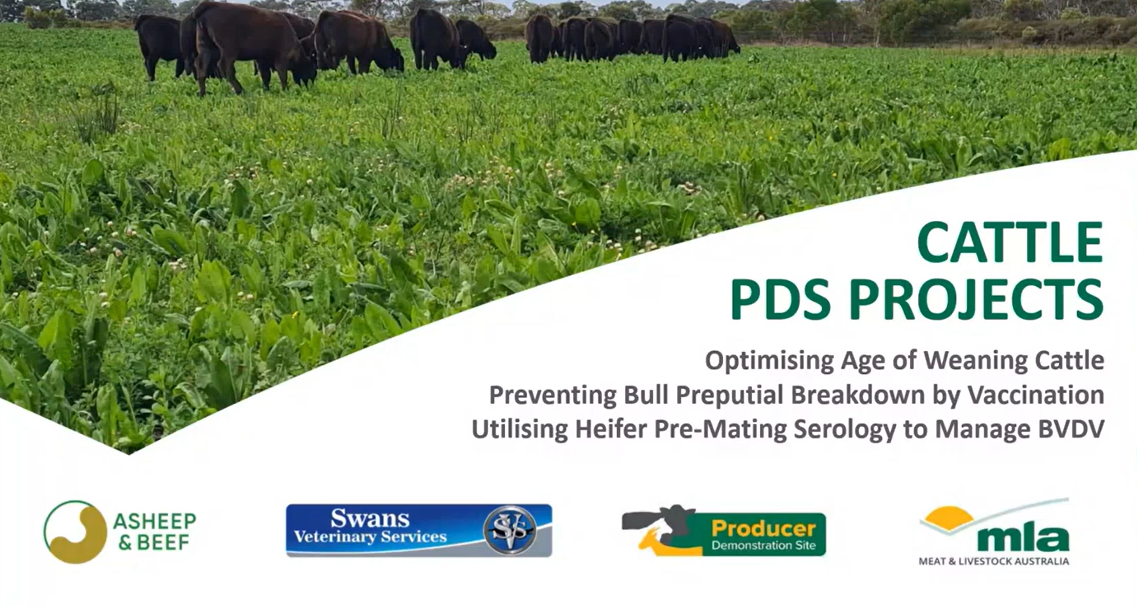
In this webinar, hear an update and findings to date from the project’s facilitator, Dr Enoch Bergman, along with demonstration site host producers Ryan Willing (Carnigup), Simon Fowler (Chilwell Farms) and Nick Ruddenklau (Epasco).
Watch this one minute video to find out more about the PDS program and how it benefits producers across Australia.
Interested in participating in a PDS? Find out if it is for you by watching this short video.
PDS news
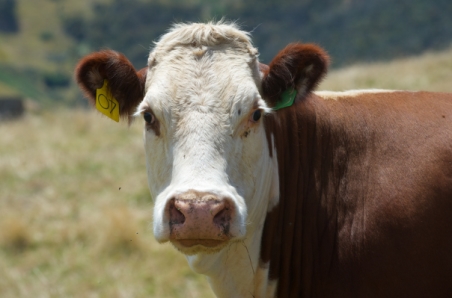
Running a successful commercial breeding enterprise requires producers to retain resilient, productive and, above all, profitable animals. To achieve this, it’s important to select not only the right bulls for joining but also the right females.
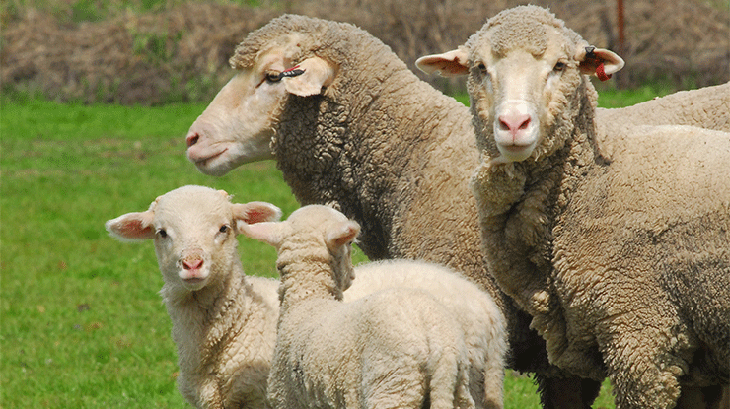
The ‘Improving lamb survival on leguminous pasture’ Producer Demonstration Site (PDS) is a four-year project driven by the Longford Red Meat Group in Tasmania.

Learn how sheep producer Chris Tomlinson used saltbush to transform unproductive land into high‑value feed and shelter for his 2,200 Merino‑cross ewes.

After retiring, rural journalist Murray Arnel bought a run-down dairy farm near Echuca. Rather than slowing down, he said he planned to “stay curious”.