Rain drives sharp fall in cattle yardings
Key points
- October rain in key cattle regions shook up the market.
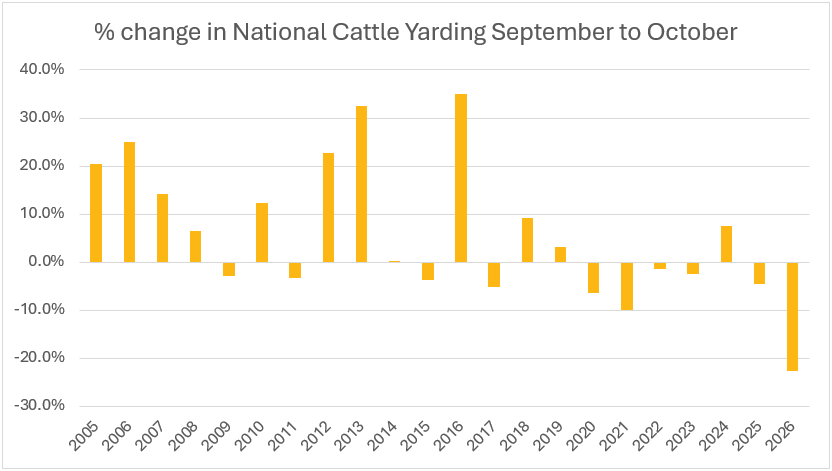
- National cattle yardings fell 22.6% from September to October, marking the steepest September to October decline in 20 years.
- As processor supply tightened, some processors reduced shifts.
Widespread rain across key cattle-producing regions in October had far-reaching impacts on the cattle market, affecting yardings, prices and processor throughput.
October rainfall
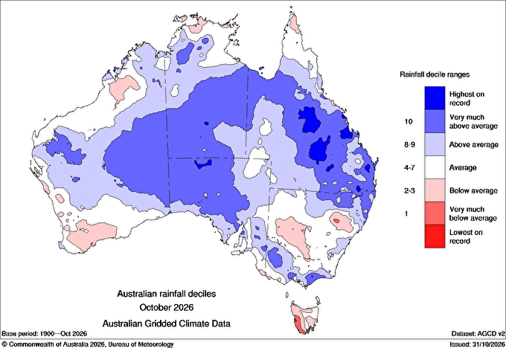
Eastern Australia was forecast by the Bureau of Meteorology (BOM) to be dry throughout spring. However, conditions changed drastically last month, bringing some of the highest October rainfall on record for parts of central Queensland, and above-average falls for parts of northern NSW.
This led to a sharp pullback in the national cattle yardings as producer confidence lifted, encouraging retention while road access became an issue through much of Queensland.
While the rain has been a welcome relief for producers and backgrounders, lifting confidence and prices, the impacts have been difficult further along the supply chain for lot feeders and processors.
Source: BOM
Impact on yardings
The rain’s impact on national cattle yardings has been significant. Looking back through two decades of national cattle yarding data, the September-to-October 2026 change was a 22.6% decline, the steepest pullback in 20 years. The next closest was a 10% pullback in 2021 and the average over the 20-year period is a 6% increase in the total yarding.
While there have been years of more stock coming through from September to October, a pullback of this scale is rare.
Source: NLRS
As expected, the pullback was more prominent in Queensland, with a 46% month-on-month drop in yardings, followed by NSW at -14% and Victoria -5%.
Impact on prices
The pullback in supply over the month has been a whiplash and had strong impacts on prices over the month. Both the National Feeder Steer Indicator and the National Young Cattle Indicator lifted 11% from 1–31 October.
While the price rises and boosts to feedbases have been celebrated by producers, October has also bought a sharp drop in slaughter figures. A number of processors have made the call the call to drop shifts with supply difficult to come by. The latest NLRS slaughter figures for the week ending 30 October show a sharp decline over previous years, down 15% on 2025 levels and 8% on 2024 levels. Please note: a reporter dropping out of the NLRS slaughter report in 2026 slightly exaggerates these figures.
Attribute content to: Alex Fry, MLA Market Information Analyst.
Information is correct at time of writing on 6 November 2026.