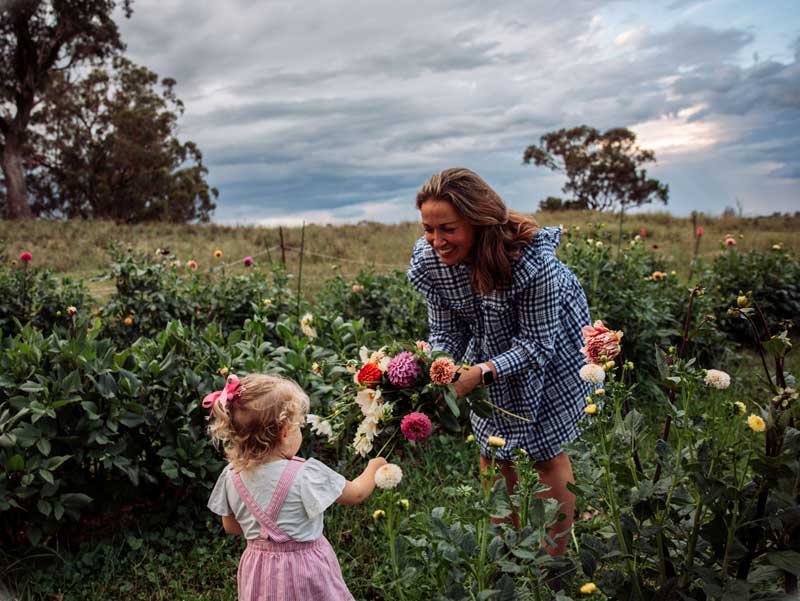
 Kristen and her daughter Emma on their Cassilis flower farm, which provides diversification alongside their sheep and cattle enterprise. Photo by Bianca Hanrahan Photography.
Creating opportunity beyond the paddock gate
For Kristen Hegarty, diversification started with a handful of flowers and a simple idea – make use of the small pockets of time around family life and farming.
What began as a side project has since evolved into a thriving complementary enterprise and prompted Kristen to think more broadly about how livestock businesses can create new opportunities and build greater resilience for the future.
Curiosity led her to undertake a 2026 Nuffield Scholarship to explore diversification opportunities that could help livestock producers strengthen their operations and reduce reliance on a single income stream.
“I realised there was potential to build something alongside livestock production that added resilience and flexibility to the whole business,” Kristen said.
Based at Belvedere, near Cassilis in NSW, Kristen and her husband Simon manage a 1,000-hectare sheep and cattle property run in partnership with Simon’s parents.
Alongside the family livestock operation, Kristen also runs Cassilis Flowers, growing seasonal flowers including dahlias, ranunculus and natives for direct and wholesale markets.
Farm snapshot
-
NameKristen and Simon Hegarty
-
LocationCassilis, NSW
-
Area in hectares1,000 ha
-
EnterpriseMerino sheep, cattle and flower production
-
PasturesHeavy self-mulching black soils
-
Rainfall~600mm annual average
Looking beyond a single income stream
The family’s livestock enterprise remains the backbone of the business, typically running around 400 cows and up to 1,000 Merinos under a rotational grazing system.
But like many producers, Kristen has become increasingly conscious of the need to create flexibility within farming businesses.
“Land values continue to rise and seasonal variability is becoming more challenging,” she said.
“So the question becomes: how do we create more opportunity from the assets and resources we already have?”
Her Nuffield Scholarship will explore diversification models that can strengthen farm businesses without placing excessive pressure on labour, land or capital.
That includes investigating enterprises such as micro flower farming, agrotourism and paddock-to-plate experiences across Australia, the Netherlands and parts of Africa.
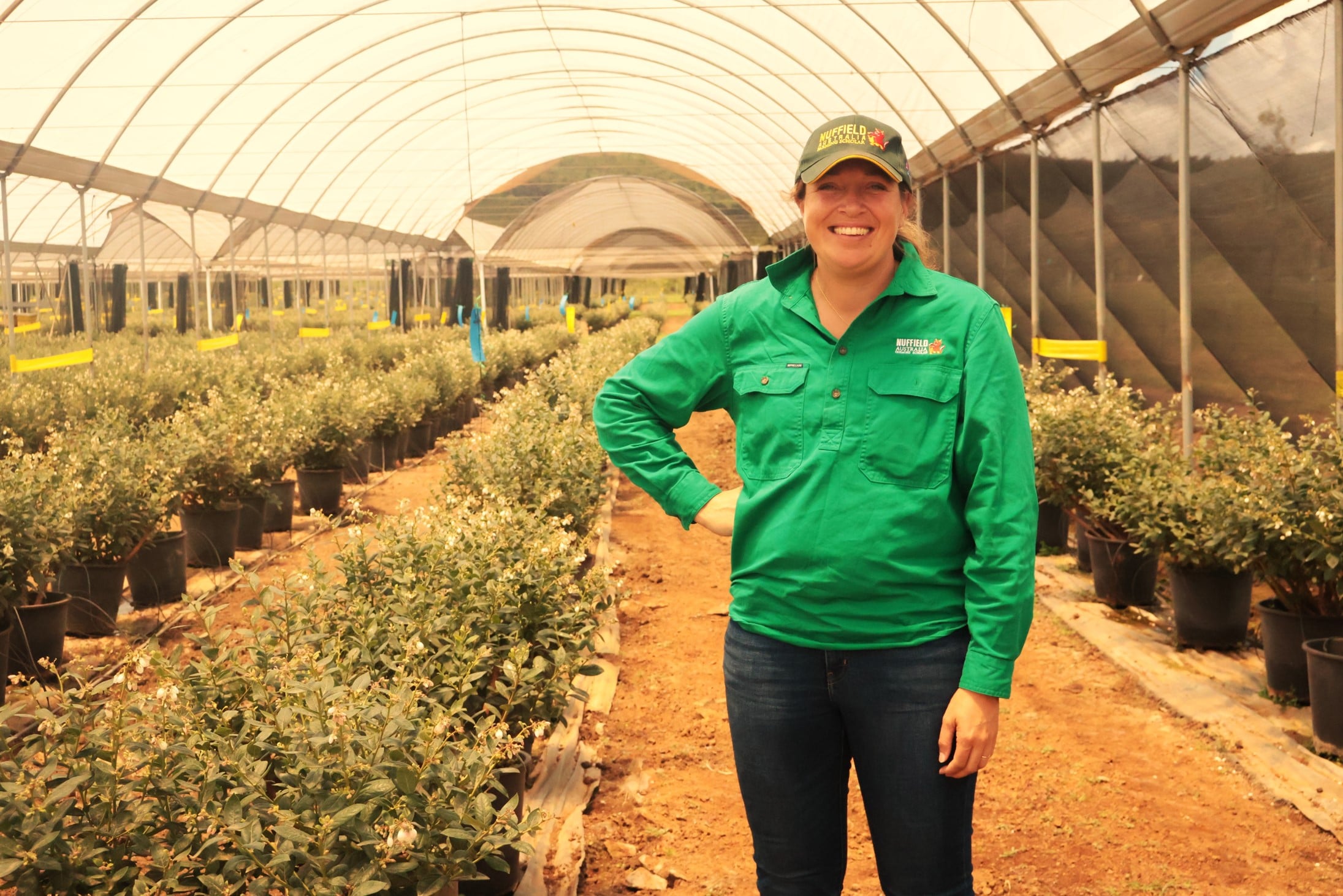
Kristen’s Nuffield Scholarship research focuses on how livestock producers can reduce reliance on a single source of income through practical value-adding opportunities. Image supplied.
Choosing the right fit
Kristen was quick to point out that not every diversification idea suited every farm or every family.
“You have to choose something that fits your interests, your skillset and your business structure,” she said.
“There’s no point creating another enterprise that just becomes a burden.”
She believed one of the biggest mistakes producers made was chasing trends without properly assessing labour requirements, profitability or long-term fit.
“Start with the numbers first, then ask whether it genuinely works within your business,” she said.
Turning an idea into a business
Kristen said one of the biggest lessons from building the flower enterprise had been the importance of starting small and learning as you go.
“It definitely wasn’t a polished business from day one,” she said.
“I just kept building it step by step.”
Over time, the business expanded into tuber and seed sales, workshops and direct online marketing, allowing Kristen to capture more value through direct customer relationships.
That direct connection became a major area of interest within her Nuffield research.
“The businesses that seem to perform best are often the ones that have a strong connection with the end customer,” she said.
“You’re not just producing a commodity.
“You’re creating an experience or a relationship around it.”
Five steps for successful diversification1. Review your income mix Assess whether your business has opportunities to generate revenue from more than one source. 2. Identify underutilised assets Consider whether existing infrastructure, skills, land or natural assets could support complementary enterprises. 3. Run the numbers first Use budgets and scenario planning to test ideas before committing significant investment. 4. Start small and refine Pilot new opportunities at a scale that allows mistakes and learning before expansion. 5. Focus on long-term fit Choose enterprises that complement your livestock operation and family goals rather than adding unnecessary complexity. |
Creating more options
For Kristen, diversification was not about replacing livestock production. It’s about strengthening the overall business.
“If one enterprise is under pressure, you’ve got another stream supporting the business,” she said.
“That flexibility can make a huge difference.”
Kristen believed many producers were reassessing business models in response to seasonal variability, rising costs and succession planning pressures.
Supported by the Australian Government’s Future Drought Fund and the Department of Agriculture, Fisheries and Forestry, Kristen’s scholarship reflected a growing focus on helping producers build more resilient and adaptable farm businesses for the future.
Looking outward
Through her Nuffield travels, Kristen hoped to benchmark diversification models internationally and better understand what makes them commercially successful.
She is particularly interested in businesses that integrate tourism, direct marketing and niche production alongside traditional agriculture.
“There’s far more scope than I originally realised,” she said.
“And a lot of those ideas could be adapted really well in Australia.”
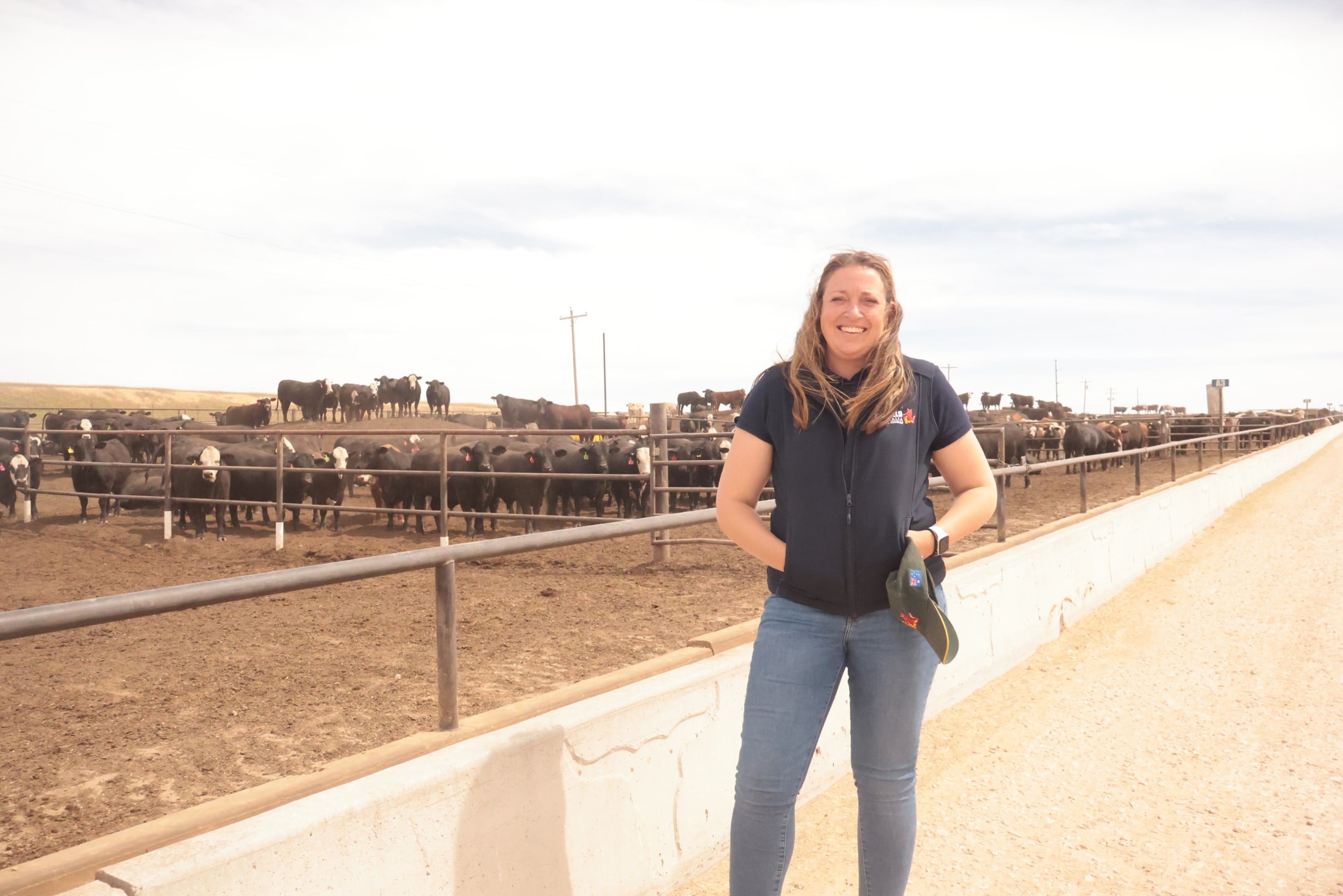
Kristen is exploring diversification models that can strengthen farm businesses across Australia, the Netherlands and parts of Africa. Image supplied.
The bottom line
At its core, Kristen’s research was about creating businesses that are adaptable, profitable and capable of supporting future generations.
“I want our kids to have the opportunity to come back to farming if they want to,” she said.
“That means building businesses with options.”
For Kristen, diversification isn't about moving away from agriculture.
The flower enterprise may have started small, but it has reinforced a simple lesson – meaningful business change often begins with a willingness to try something new.