Is aligned sentiment in sheepmeat and wool signaling a turning point?
Key points
- Sheepmeat sentiment hits +84, with 86% of producers holding a positive outlook.
- Wool sentiment has recorded its sharpest turnaround, rising 80 points to +45.
- Positive sentiment is translating into producers' intentions to expand breeding flock numbers.
Australian sheep producers are entering the second half of 2026 with a level of optimism not seen since sentiment tracking began. The latest Sheep Producers Intentions Survey (SPIS) shows both the sheepmeat and wool sectors recording strong positive sentiment simultaneously for the first time in the survey’s history.
The May 2026 results reveal a national net sentiment of +84 for sheepmeat, up 32 points from May 2025 and six points from October 2025. An overwhelming 86% of surveyed producers surveyed hold a positive outlook for the sector, compared with just 2% who are negative.
This confidence reflects strong market conditions and what producers are seeing in saleyards, with sustained high prices for both lamb and mutton. Heavy lamb and mutton are trading above 1,000¢/kg and 900¢/kg, respectively. After two years of below-average rainfall, improved seasonal conditions, particularly across southern regions, have also contributed to the lift in confidence.
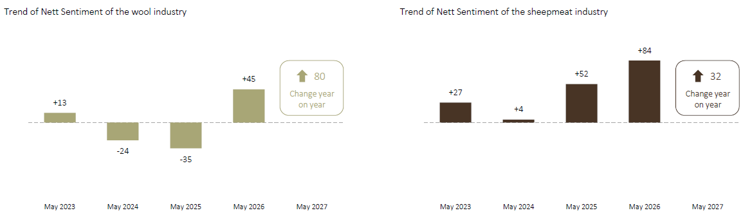
Wool sentiment is also supporting optimism across the industry. After several years of subdued outlook, net sentiment for wool has climbed to +45, a remarkable 80-point increase since May 2025. More than half of producers (52%) now hold a positive view of the sector's prospects over the next 12 months.
This improvement has been underpinned by wool prices, which have risen 57% over the past 18 months and are currently sitting at a seven-year high.
With both sectors now reporting strong positive sentiment, the outlook is likely to translate into renewed confidence in flock retention and on-farm investment.
Flock rebuild on the cards
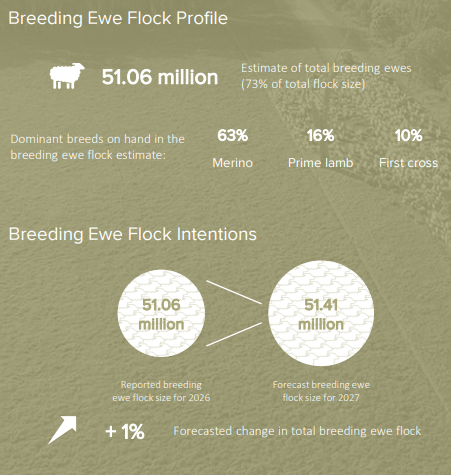
The strong confidence is translating into producers’ intentions for future flock numbers. The national breeding ewe flock is estimated at 51.06 million head, with producers forecasting modest growth of around 1%, or an extra 350,000 ewes, over the coming 12 months. This marks a sharp reversal from the 9% contraction forecast at this time last year.
The turnaround is even more pronounced in the wether flock. Estimated at 5.85 million head, wether numbers are forecast to grow by 10%, compared with an 11% decline predicted in May 2025. Producers intending to increase wether numbers now outnumber those planning reductions for the first time in several surveys, with Queensland, SA and NSW leading the anticipated growth.
Breed mix holds relatedly steady
Merinos remains the backbone of the national flock, accounting for 63% of breeding ewes and 87% of wethers. Producers in WA, NSW and Queensland carry a notably higher proportion of Merinos than the national average.
Prime lamb and first-cross breeds continue to hold a strong position in the ewe flock, particularly across Victoria and Tasmania. This enduring Merino base, paired with growing dual-purpose production intentions, positions the industry well to capitalise on strength in both wool and sheepmeat markets at the same time.
Weather and input costs still front of mind
Despite the improved outlook, producers haven't lost sight of ongoing challenges. When asked what will shape their on-farm decisions over the next six months, weather and seasonal conditions dominated responses (56%), followed by feed availability (31%) and input costs, particularly fuel and fertiliser. Off-farm factors were also front of mind, with government policy and regulation also featured prominently in producer feedback.
Access The full SPIS May 2026 report here
Attribute content to: Emiliano Diaz, MLA Senior Market Information Analyst.
Information is correct at time of writing on 17 July 2026.