A good living to be made from WA lambs
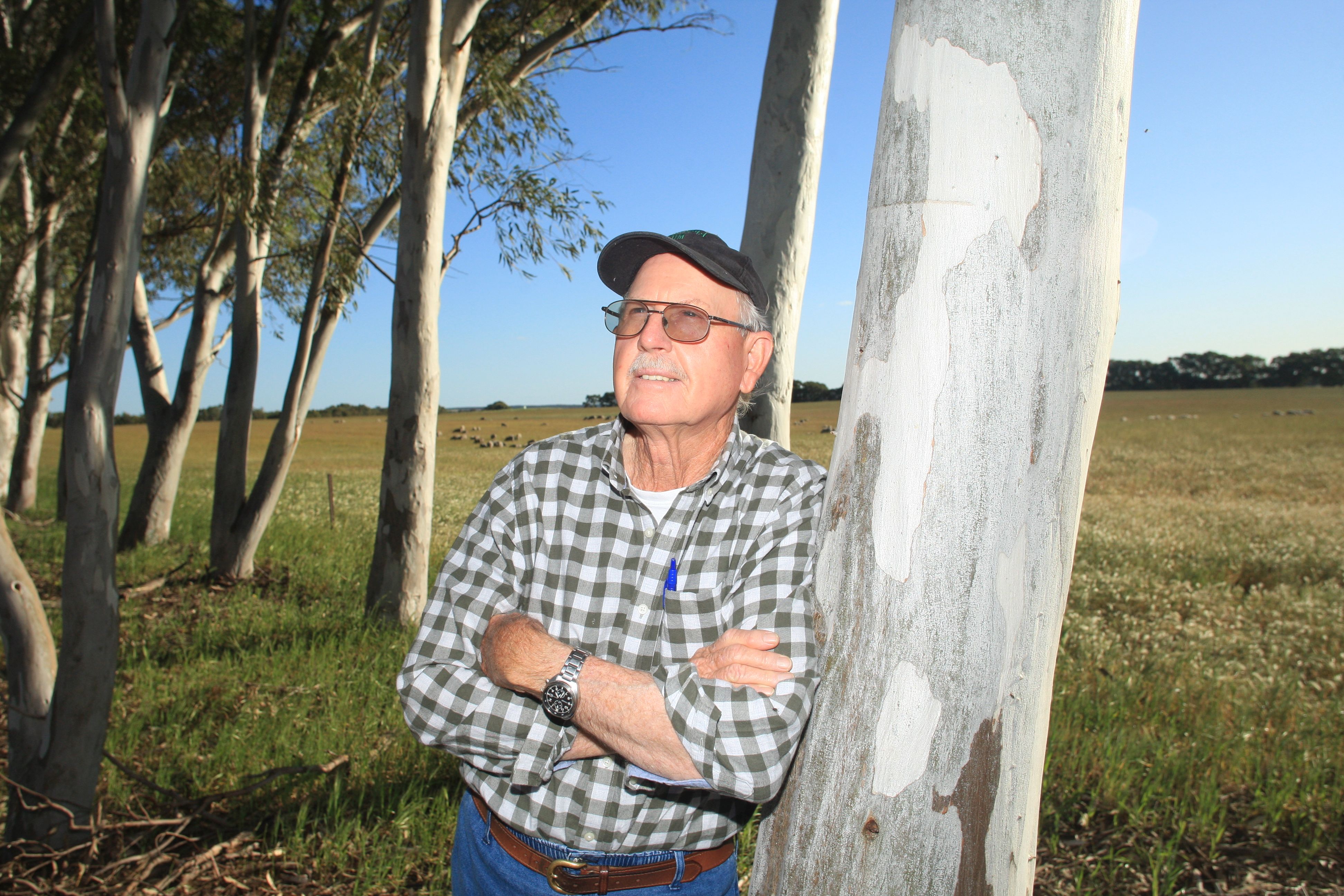
Harley Sears, Wakeford Farms, WA. Image credit: Bob Garnet
Despite mounting global challenges, market demand for high-quality heavy lambs in premium international markets has seen prices rise significantly over the past five years.
From his property in the heart of the WA Northern Wheatbelt, sheep producer Harley Sears is capitalising on this opportunity and breeding heavy lambs destined for the North American market.
A robust market
Harley is a shareholder member of the Western Australian Meat Marketing Co-operative (WAMMCO) and sells his lambs and mutton to their Katanning processing facility.
WAMMCO CEO, Coll MacRury, said the shortage of lambs Australia-wide has seen producers achieve record payouts over the last 18 months or more.
“Since COVID-19, we've seen a demand from consumers, particularly the under 45s, for lambs reared in a clean, green, antibiotic-free environment,” Coll said.
“That’s a natural fit for our export lamb, which has helped drive the significant price increases we’ve seen over recent years.”
While global volatility continues, demand across North America, Asia, Europe/UK and the Middle East remain strong.
“The Canadian market has always been fairly robust because of the French influence in the large provinces such as Quebec and Ontario,” Coll said.
Despite the regional conflict, Coll said demand in the Middle East had not declined and it continued to be WAMMCO’s second most lucrative international market.
“Overall, I think the outlook for lamb looks very strong and the producers who choose to stay with it are likely to be very well rewarded going forward,” Coll said.
Harley agrees, believing there is a good living to be made for producers who can grow robust, high-performing lambs. For him, success comes down to a combination of strategic factors – genetic selection, targeted nutrition management, animal health and creating the right environment for sheep to thrive.
Breeding for success
When Harley started his sheep enterprise two decades ago, his focus was traditional Merino sheep with high-quality low-micron wool. However, high wrinkle levels made them prone to flystrike. 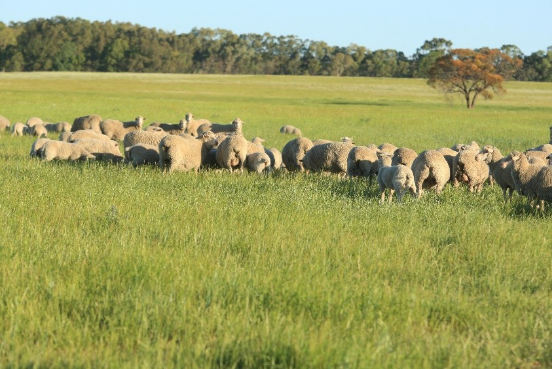
He initially introduced Poll Dorset genetics to improve growth and carcase traits before shifting to a self-replacing Multi-Purpose Merino (MPM) operation. Today, Harley runs both a pure MPM and White Suffolk x MPM crossbred lamb business.
Genetics sit at the centre of every breeding decision, with Australian Sheep Breeding Values (ASBVs) central to Harley’s ram selection each year.
By prioritising traits including early growth, eye muscle and fat depth and staple length, Harley is breeding a highly productive, easy-care sheep which continue to produce quality wool without the need for crutching or mulesing.
“Those genetics are also delivering lambs that bulk up quickly and develop into excellent carcases with an average yield of around 47%," Harley said.
In season 2025/26, Harley produced a total of 973 crossbred and pure MPM lambs that averaged 29.41kg and returned $295.58/hd.
Incremental improvements add up
Harley’s lamb survival rates are impressive: 130% or better for maiden ewes and around 165% for mature ewes (two years and older). The overall farm averages a lamb marking percentage of 145%, calculated by total ewes joined to rams.
While genetics provide the foundation, Harley said small changes to on-farm management practices across multiple parts of the business can make a huge difference to your numbers over time.
“In my experience it has been relatively easy to lift our lambing rate by 10% through mating or pre-mating strategies and providing access to good nutrition,” Harley said.
One simple management practice he recommends is shearing pregnant ewes in early May, five to six weeks prior to lambing.
"We see a consistent improvement in lamb survival rates with the pre-lambing shearing and by shearing the ewes every 6 months we aim to present wool to the market with a minimum staple length of 65mm,” Harley said.
Challenging convention
Harley said some of his management decisions have raised eyebrows over the years.
When it comes to lambing, Harley opts against splitting ewes up based on pregnancy status but prefers to run all of his pregnant ewes together in small mobs with the majority stocked at 80-120 lambing ewes per paddock.
"The sheep seem more settled when they stay together in familiar paddocks with familiar mobs," he said. "It feels more natural and the survival rate for our multiples improved – so we've been very happy with the results.
The value of dataMelanie Smith, MLA’s Program Manager - Sheep & Goat Productivity, said pregnancy scanning was only the first step in understanding the nutritional and management requirements of ewes, and that the real value lies in using the data to inform on-farm decision making for improved productivity and profitability. "Research shows that ewes carrying singles, twins and triplets have different nutritional requirements, especially in the last trimester,” Melanie said. “By preg scanning, producers can budget feed and manage nutrition based on the different needs of these groups – ensuring feed resources are directed to the animals that need them most.” Melanie said this supports improved lamb survival and performance, as well as delivering better ewe recovery by ensuring single-bearing ewes aren’t over-conditioned and higher-risk multiple-bearing ewes receive the nutrition they require. “Research has shown this strategy can help producers achieve target condition scores at lambing and return an average profit of $5.55 per ewe, highlighting the real value of turning pregnancy scan data into management decisions,” Melanie said. |
In 2010, Harley introduced alpacas after recognising their effectiveness as livestock guardians.
"They're fantastic carers," he said. "I try to have two in each of our nine paddocks, and they just become part of those family groups."
Combined with his baiting programs and ongoing pest control, the alpacas help keep the foxes at bay and create a safer lambing environment.
Pasture management
Harley believes that rotational grazing across multiple paddocks helps maintain feed quality and reduces pressure on country throughout the year, while also creating more pasture diversity.
"We don’t want a monoculture in our paddocks," he said. "Sheep perform best when they've got a variety of species to choose from."
Harley’s paddocks feature a mix of high-protein species including ryegrass, serradella and clover but it is the lupins which form the backbone of his feeding system.
Pre-joining nutrition
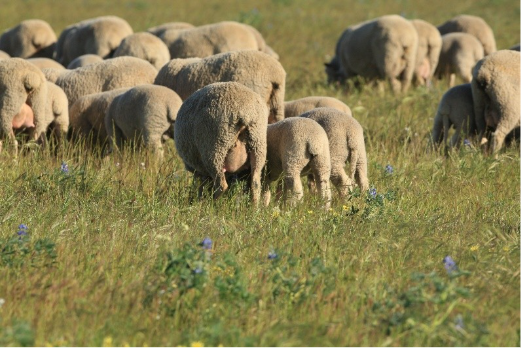
Good nutrition before joining is key priority. Harley relies primarily on white lupins with lots of dry grasses and stubble and is supplemented with hay when the conditions demand it.
“Providing white lupins in the lead-up to mating supports reproductive health and ensures the ewes are on a rising plane of nutrition and condition, which has a direct impact on conception rates and lambing percentages," he said.
He also swears by trail feeding, with both rams and ewes receiving a kilogram of lupin every two to three days in the lead-up to mating.
Lamb nutrition
Harley wants his lambs on the mother for as long as seasonal conditions allow before weaning them onto high-quality standing lupin crops.
Ordinarily, he would run nine lambing paddocks each year, with white lupin covering around 300ha.
"That protein allows them to maintain exceptional growth rates all the way through to market Harley said.
Hedging against unpredictable conditions
Harley maintains hay reserves as insurance against seasonal variability.
"If the season comes off early, we've got hay ready to bridge the gap until the lupins come in," he said.
"Having that feed on hand means we’re prepared and lamb growth doesn’t fall away."
Supplementing for success
Harley ensures his ewes and lambs receive carefully formulated mineral supplements to support bone strength, growth and rumen function.
He uses Bio John products which provide a range of minerals for the ewes, particularly calcium sulphate, which protects against bone depletion in ewes rearing multiples.
Going into spring, the lambs start eating more than the ewes, and due to their high protein diet, they need sulphur licks for their rumen.
Vitamin E deficiency
Harley also pays particular attention to Vitamin E levels in his lambs, especially once green feed dries off during summer.
"When lambs are growing rapidly on dry feed, Vitamin E deficiency can become a serious issue," he said. "You need to stay ahead of it because those fast-growing lambs have very high requirements."
“We’ll bring them in and drench them with 5ml every six weeks – usually before Christmas (mid-December), and then on 6-weekly intervals.”
Shade and shelter
For Harley, it’s been equally important to build an environment that supports animal welfare as well as productivity.
A former cropping enterprise, Harley fenced his property and planted more than 65,000 river gums after purchasing it in the early 2000s.
Over the years, this has created extensive shade and shelter belts across most of his paddocks – with its sandplain country and undulating terrain creating natural protection from all-weather challenges.
“In the heat of summer, our lambs can always find shade because those mature trees cast long shadows across every paddock, reducing heat stress and encouraging stock to remain productive,” Harley said.
Positioned for the future
For Harley, the formula for success is straightforward: productive genetics, excellent nutrition, sound animal health and an environment that allows sheep to express their full potential.
“If you can get those fundamentals right, the rewards are there."
With premium international markets continuing to seek large, high-quality lamb carcases, Harley believes WA producers are well placed to capitalise.
"The opportunity is definitely there," he said. "If producers focus on raising robust lambs and keep improving the little things, I think there's a very good living to be made from lamb production in Western Australia."