Emerging Objective Measurement Investments
Overview
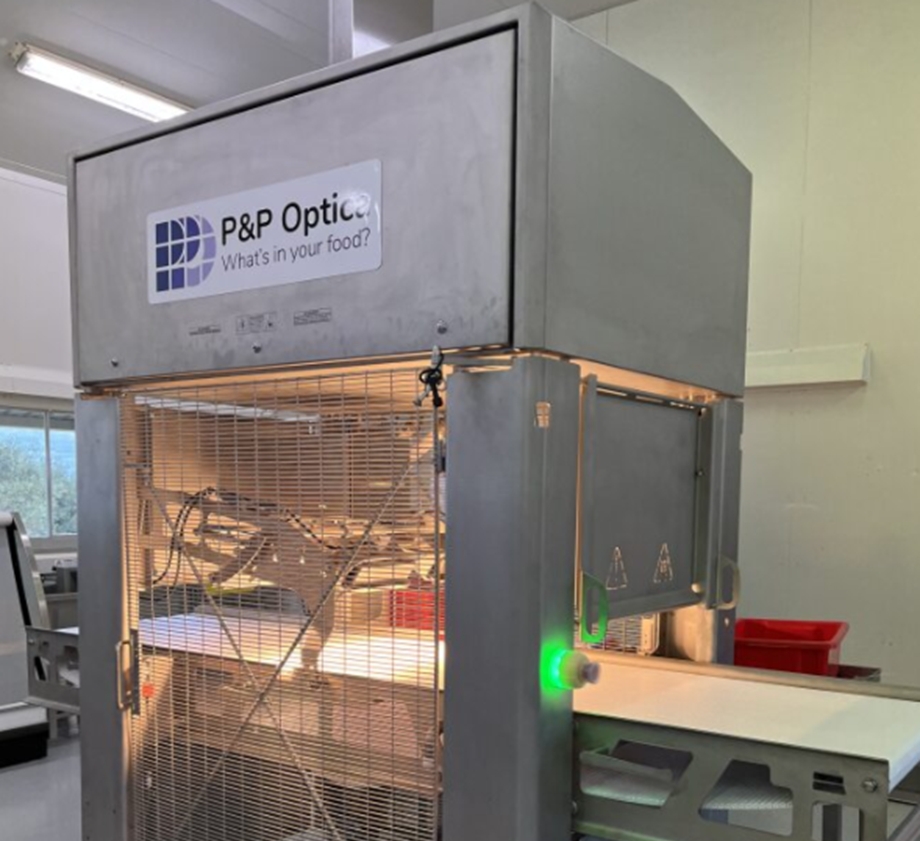
These projects and investments focus on new and emerging value propositions, traits, and technologies within the red meat industry. This includes the development of innovative devices and methods to measure existing descriptors of value—such as lean meat yield (LMY) and eating quality—as well as the identification and measurement of new traits that can deliver additional value. Examples include shear force (a key indicator of tenderness), animal health attributes, and components of the red meat supply chain collectively referred to as the ‘5th quarter’ (offal, hides, skins, blood, bones, and other co-products).
These investments are typically blue-sky initiatives, characterised by higher levels of technical and commercial risk and lower readiness on technology and investment scales. However, they offer significant potential returns if successfully developed and adopted, positioning the industry for long-term growth and diversification.
Core Activities
In addition to supporting implementation, early adoption, and live animal measurement technologies, the Objective Measurement (OM) programme places strategic emphasis on Horizon 3 projects—long-term opportunities that are generally 5–10 years away from commercial realisation but promise substantial industry impact.
Key initiatives include:
- ‘5th Quarter’ Measurement OM: Development of objective measurement technologies to support grading and harvesting of red meat co-products, including offal, hides/skins, blood, bones, and other raw materials. These technologies aim to enable processing into higher-value products such as functional foods, nutraceutical ingredients, and bio-based materials, creating new revenue streams for the industry.
- Next-Generation Devices for Existing Traits: Research and development of advanced tools to improve the precision and efficiency of measuring established traits such as eating quality and yield, leveraging innovations in imaging, spectroscopy, and sensor technology.
- New Traits and Measurement Technologies: Exploration of novel descriptors of value within red meat supply chains, such as DEXA Bone R and other metrics that can inform product differentiation, health claims, and consumer-driven quality standards.
Benefits to industry
The benefit to the red meat industry of these Horizon 3 investments lies in their potential to unlock new sources of value, enhance sustainability, and strengthen global competitiveness. By developing technologies that measure emerging traits and co-products such as offal, hides, and bones, the industry can maximise utilisation of the entire animal, reducing waste and creating premium products for high-value markets, including nutraceuticals and functional foods. These innovations also enable greater precision in grading and quality assurance, supporting brand differentiation and consumer trust. Furthermore, investing in advanced measurement devices and novel descriptors positions Australia as a leader in meat science and technology, driving long-term profitability and resilience. Ultimately, these projects provide a pathway for the industry to diversify revenue streams, meet evolving market demands, and maintain its reputation for quality and innovation.
Projects
Project Code: P.PSH.1350
Objective: A preliminary project has confirmed the potential for hyperspectral imaging to increase the accuracy of capturing health, quality and contamination data in a single image. This project will develop a prototype offal health hyperspectral image capture system that can collect offal health data on the processing line in real-time, to partially automate offal health scoring in the abattoir and provide greater consistency, accuracy, and integrated traceability for offal products for Australian red meat processors, and enhanced feedback for producers.
Status: In Progress
Project Code: P.PSH.1494
Objective: This project will build, develop and evaluate an automated NMR hot lamb IMF measurement solution in a lamb supply chain. An existing pre-commercial prototype will be further developed to become an automated device for commercial testing to measure IMF at chain speed. The NMR device will also undergo final calibration with the intent to seek AUS-MEAT accreditation.
Status: In Progress
Project Code: P.PSH.1542
Objective: This project will support the first commercial installation of the Miniprobes device at a commercial meat processing plant, and an accuracy trial that will contribute to eventual AUS-MEAT accreditation for the scanner to measure intramuscular fat. This project will also support initial work on the development of a new feature for the device to estimate the carcase fat score, in parallel with measuring intramuscular fat.
Status: In Progress
Project Code: P.PSH.1590
Objective: This project aims to initiate the development of new objective measurement technology specifically targeting lamb to enable a visual hot carcase scan to measure the carcase composition, provide feedback to producers and insights to the processor on predicted saleable cut yields and estimated lean meat yields. The project will utilise CT scanners from which images will be taken, carcase images together with actual weights of primals, cuts, muscles, fat and bone of individual lamb carcases. The data from the project will be utilised to support machine learning to help with optimisation of cut to carcase allocation. Improved cut to carcase allocation will improve overall saleable meat yield, improve boning room throughput and support processing plant efficiency drivers.
Status: In Progress
Project Code: V.TEC.1728
Objective: The project aims to develop a prototype online monitoring system of meat composition and plastic physical contaminants detection using microwave scanning technology for red meat processing facilities. Specifically, this project will evaluate an initial concept for evaluation of detecting plastics in trim and minced product to support future adoption of the Microwave prototype device by primary and secondary beef and/or lamb processing. This project will be carried out over two experimental phases. The first phase is the design and development of hardware, software and online data processing systems. The second phase will be to use this concept design within a laboratory setting to calibrate the meat scanning and plastic detection system. The project aims to develop a prototype online monitoring system of meat composition and plastic physical contaminants detection using microwave scanning technology for red meat processing facilities
Date Published: 23 September 2025
Project Code: V.TEC.1723
Objective: An imaging needle which uses an established medical technology has established a positive proof-of-concept to measure IMF% in an un-cut lamb carcase. A current project is re-engineering the probe to be more robust, and to develop an initial automated image analysis algorithm, to enable further testing and development to be undertaken under commercial conditions utilising the MLA Resource Flock. This project supports an ARC Linkage Grant to refine the pre-commercial prototype under development, validate the precision and accuracy of IMF measurement and release a prototype device to an early-adopter industry partner.
This project will translate a pre-commercial prototype probe proven to measure intra-muscular fat (IMF) in lamb carcases, and adapt it to the beef industry for measuring IMF in hot beef carcases. The device is based on a handheld device with 4 needles containing fiber-optic probes that measure intramuscular fat using optical coherence tomography. This project supports an Australian economic accelerator (AEA) grant to provide the Australian Beef Industry with a new device to provide a rapid, reliable measurement of meat-eating quality.
Date Published: 17 March 2025
Project Code: V.TEC.1733
Objective: This project will translate a pre-commercial prototype probe proven to measure intra-muscular fat (IMF) in lamb carcases, and adapt it to the beef industry for measuring IMF in hot beef carcases. The device is based on a handheld device with 4 needles containing fiber-optic probes that measure intramuscular fat using optical coherence tomography. This project supports an Australian economic accelerator (AEA) grant to provide the Australian Beef Industry with a new device to provide a rapid, reliable measurement of meat-eating quality.
Status: In progress
Project Code: V.TEC.2400
Objective: This project will investigate the potential of NMR to predict shear force and tenderness, which would be valuable inputs into both MSA sheep and beef models and offer the potential to improve their accuracy. More accurate prediction of tenderness would allow for better prediction of eating quality, greater ability to segregate carcasses into brands, generate a more accurate assessment of value and ability to deliver consistent products to the consumer.
Date Published: 24 February 2025
Project Code: V.TEC.2401
Objective: This project will reinitiate the Industry Calibration Working Group (ICWG) that was formed during the ALMTech projects and tasked with facilitating the industry’s calibration and adoption of new technologies and traits by defining their measurement methodologies, error tolerances, accreditation processes and auditing systems for review, refinement and endorsement by the Australian Meat Industry Language and Standards Committee (AMILSC). This group will develop internationally recognised calibration and auditing systems for new devices and provide coordinated experimental designs and trials to support the ongoing development, accreditation and adoption of objective measurement technologies.
Status: In progress
Project Code: V.TEC.2500
Objective: This project will perform a scoping study to compile existing DXA images and consumer eating quality data and use this to investigate further the potential of DEXA to predict eating quality in sheep meat and how this measure could be incorporated into the MSA sheep cuts model. Previous work has been completed that describes an association between DEXA images and consumer eating quality, however an analysis of a larger data set is required to determine potential to include this in MSA sheep cuts model, an outcome this project will deliver.
Date Published: 30 October 2025
Project Code: V.TEC.2600
Objective: This project will design, manufacture and validate a device to measure intramuscular (IMF) fat in hot cattle carcases. It builds upon the developers previous work to develop such a tool for the Sheepmeat Industry. It supports a CRC-P grant of $1.5m awarded to Miniprobes to provide the Australian Beef Industry with a new device to provide a rapid, hot, reliable measurement of meat-eating quality.
Status: In progress
Project Code: P.PSH.1548
Objective: This project will be the first project to deliver a real-time yield management system to provide feedback to producers based on value attributes, including quality and yield, using a combination of enabling systems and processes to link individual carcases and cuts to animal identification. The expected outcome will be to improve overall business profitability, efficiency and help to develop tools to improve feedback to producers on primal carcase weights and yields, boners on cutting techniques and accuracy, marketing and sales teams on realisable cut plans to carcase types. At an operational level, this supply chain tool will support the livestock procurement team, sales, operational planning, and boning room managers. Strategically the project will provide a commercial cost benefit analysis and ROI for TFI for OM technologies, which will allow for improved hot and cold cut to carcase allocation to underpin future OM technology investment.
Status: In progress
Project Code: V.TEC.2601
Objective: This project will establish the relationships between DEXA, microwave, E+V, P8 and CT measurements of lean meat yield and beef retail cut weights. These relationships will underpin the training, calibration and potential accreditation of the commercial technologies for predicting a CT trait if introduced to the beef industry, as has been achieved in the Australian lamb industry, or potentially to predict the current legislated lean meat yield estimate of P8 fat depth. To achieve this the project will also fund required repairs to the industry owned mobile CT device.
Status: In progress
Project Code: V.TEC.2601
Objective: This project will investigate the potential of NMR to predict lean meat yield (LMY), which is a key input into the MSA sheep cuts model. If successful NMR will offer the sheep industry a lower-cost, low footprint LMY solution also capable of measuring IMF%, thereby delivering the key metrics included in the MSA sheep cuts model.
Status: In progress
Project Code: V.TEC.2517
Objective: This project aims to acquire DXA images and eating quality measurements across a range of different sheep cuts and phenotypically diverse animals, establish an auditable calibration system, suggest alterations to the cuts-based MSA sheepmeat model, and ultimately seek Australian Meat Industries Language and Standards Committee approval for this commercial measurement and its use within MSA grading systems. In addition, this project will explore whether a similar association between DXA bone R and eating quality exists in beef.
Status: In progress
Project Code: V.TEC.1732
Objective: The project aims to quantify the true value that can be created at a processor level within a distinct commercial red-meat supply chain as a result of commercial implementation of Objective Measurement (OM) technologies. A minimum of four distinct supply chains (with various combinations of specific markets and distribution channels) will be validated in this project to ensure the variation of commercial factors are accounted for. This review will also consider OM data availability, the decisions which may be supported by this data, and the transactional impacts at a processor level. Project deliverables will also include excel based models that may be used by industry.
Date published: 17 November 2025