Most cattle producers optimistic about the next year
Key points
- National cattle producer sentiment remained strong at +53.
- Sentiment lifted in several southern states, with SA and Victoria recording the highest net sentiment at +66.
- Herd intentions remain mixed, with 26% of producers looking to increase cattle numbers, 21% planning to reduce and 54% intending to hold steady.
MLA’s April 2026 Beef Production Intention Survey results were released this week, with more than 3,000 cattle producers contributing to the latest survey. The results show producer sentiment remains strong, with 6 in 10 producers optimistic about the cattle sector over the next 12 months.
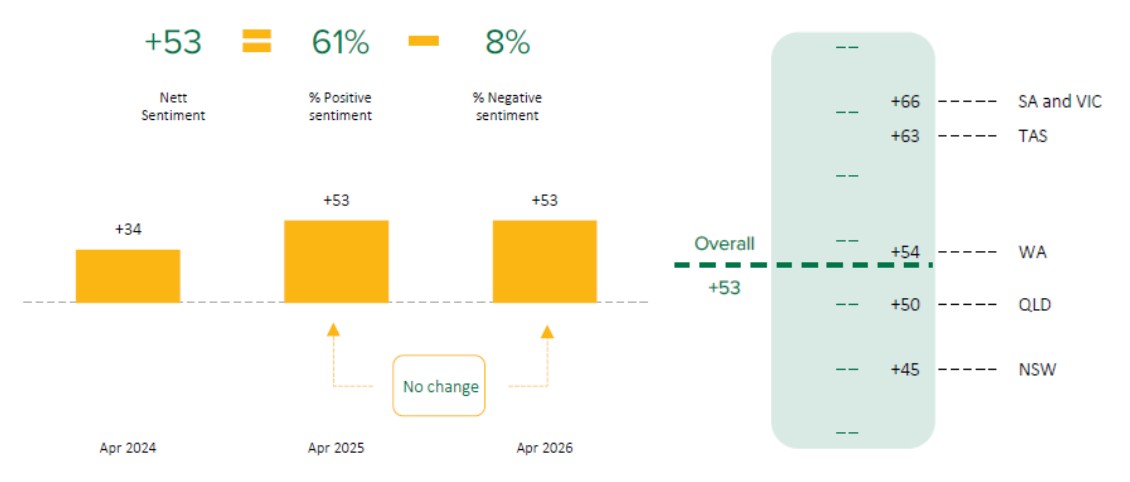
National net sentiment remained steady at +53, unchanged from the April 2025 survey. However, state-level results show clear shifts in confidence across key cattle-producing regions.
Sentiment among northern producers eased from +65 to +52, bringing it broadly in line with southern producers, where sentiment lifted slightly from +52 to +53. This indicates southern producers are feeling more positive about the year ahead than they were 12 months ago.
Sentiment by state
The strongest sentiment results were recorded in SA and Victoria, both at +66. This marks a notable turnaround from a year ago, when these states were among those with the lowest sentiment scores. WA (+54) and Tasmania (+63) also recorded strong year-on-year improvements, lifting 40 and 26 points respectively.
For producers who reported feeling more positive than six months ago, improved prices remained the leading driver. However, rainfall, stronger seasonal conditions and feed availability have moved higher in the rankings and are now among the main factors supporting improved sentiment.
These factors were particularly important in SA and Victoria, where producers were more likely to cite seasonal conditions and feed availability as reasons for increased confidence. This suggests conditions in these states have started to improve, providing some relief after two years of below-average rainfall.
On the other side, producers who reported feeling more negative about the industry identified fuel prices and shortages as the top factor, followed by geopolitical instability.
NSW and Queensland recorded an overall decline in sentiment. NSW fell 13 points to +45, placing it below the national average. The survey was conducted while parts of the state were experiencing a prolonged period of below-average rainfall, including the New England region and surrounding areas. For NSW producers who became more negative about the sector, dry conditions were the leading factor. Dry conditions were also the second-ranked influence for southern Queensland producers.
For northern Queensland producers, fuel, the war in the Middle East and production costs were the main factors weighing on confidence. It’s important to note that the survey was conducted shortly after the Hormuz Straits blockage, with strong media and public attention and markets reacting to possible outcomes.
Herd future intentions reflecting regional sentiment
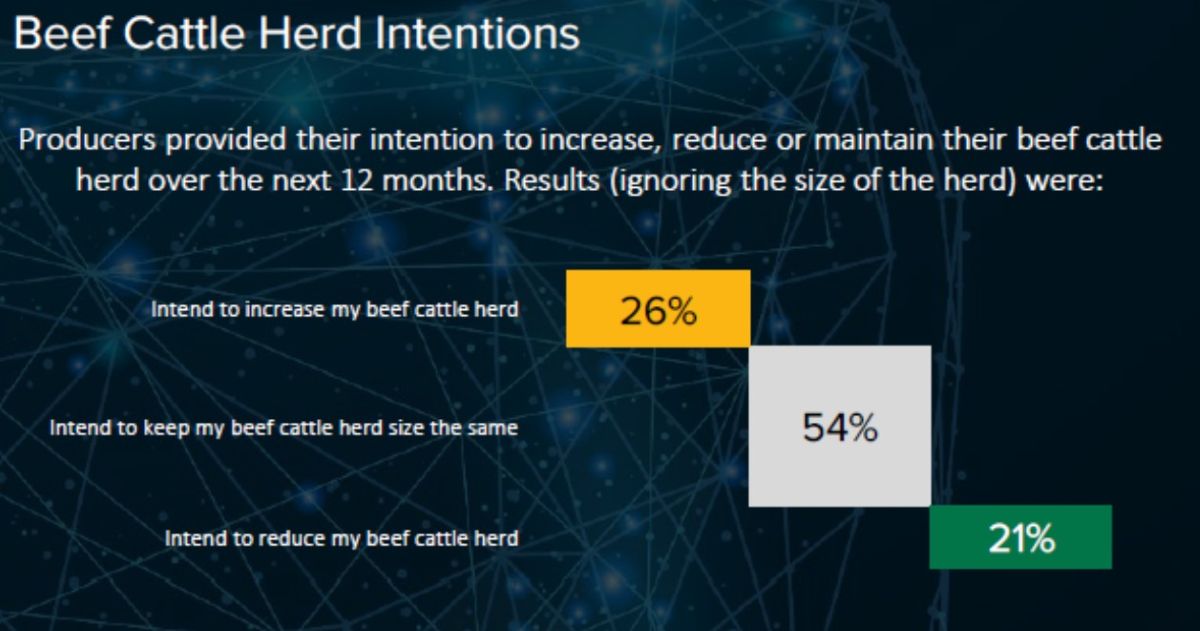
Producer sentiment influences producers’ future herd intentions. Nationally, 26% of producers intend to increase their cattle herd, while 21% plan to reduce numbers and 54% intend to keep their herd steady.
As with sentiment, herd intentions vary by state. Around one-third of producers in SA, Victoria and Tasmania intend to increase herd size, while only 15% intend to reduce numbers in those states.
In NSW, more producers are looking to reduce their herd, with 31% planning to downsize and 22% intending to increase numbers. Queensland producers sit between these two groups, with 24% looking to increase herd size and 19% planning to decrease, despite ongoing concerns around input costs.
Get these insights and more in the full Beef Production Intention Survey.
Attribute content to: Emiliano Diaz, MLA Senior Market Information Analyst.
Information is correct at time of publication on 29 May 2026.