Carcase weights dip but long-term productivity is intact
Key points
- National average carcase weights eased to 309kg/head, down from the 324kg peak in 2022.
- Grassfed cattle account for 62% of turnoff – leading to lighter average carcase weights.
- Female slaughter has significantly increased, also contributing to lighter average carcase weights.
Australian cattle carcase weights have followed a long-term upward trend, supported by ongoing improvements in genetics, production systems, more favourable feed conditions and market dynamics.
According to the latest Australian Bureau of Statistics (ABS) data, the national average carcase weight in 2025 reached 309kg/head – 47kg heavier than two decades ago. This reflects a sustained lift in productivity across the herd and continued efficiencies in production.
The expansion of the grainfed industry and record numbers of cattle on feed have contributed to this trend. Over the past decade, grainfed cattle have consistently had turnoff weights approximately 40kg heavier than grassfed cattle.
Although the average carcase weight is heavier than historical trends, it has eased slightly from the peak of 324kg/head in Q1 2022. This is due to a shift in turnoff dynamics rather than a production efficiency decline.
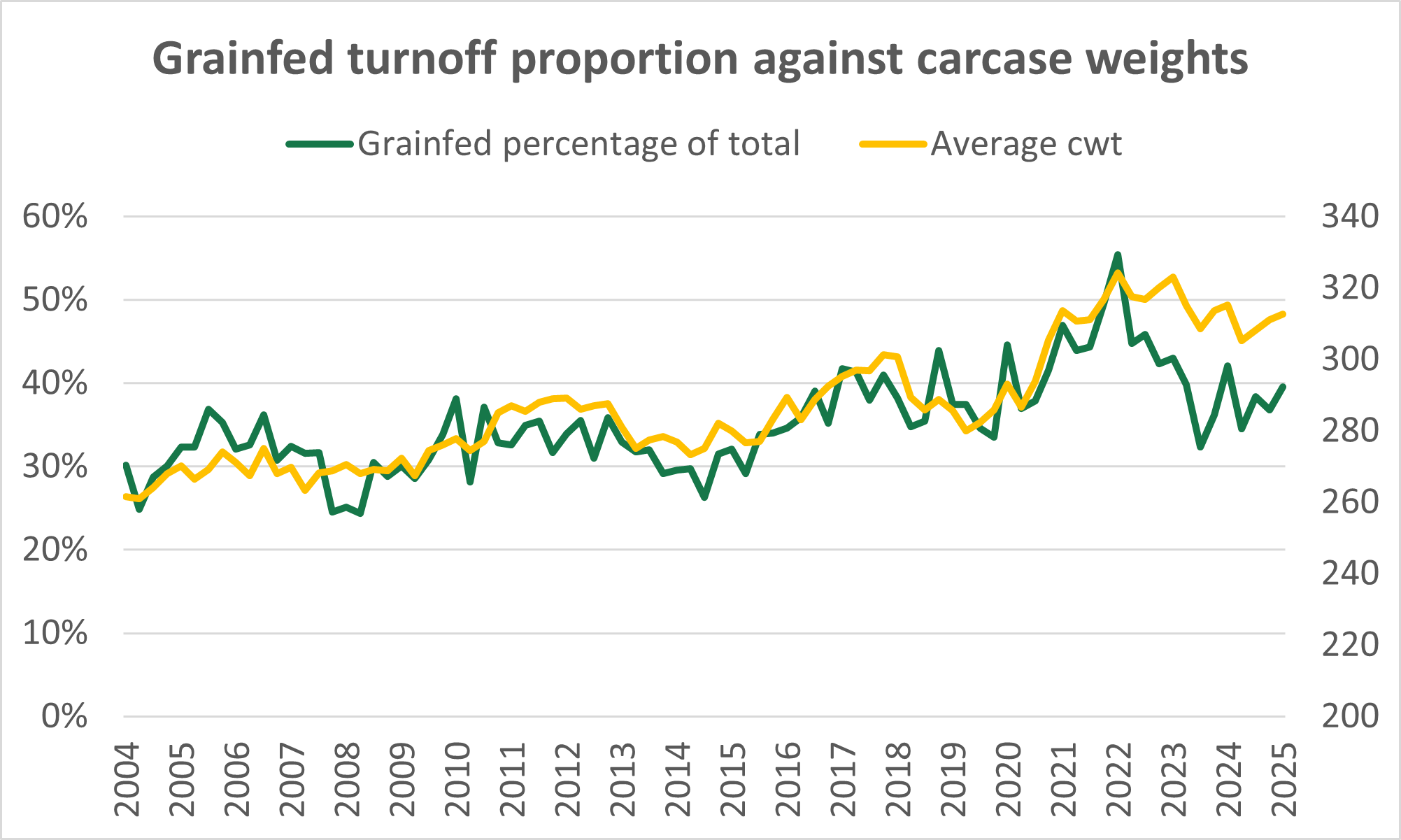
Source: ALFA, ABS, MLA calculations
Grassfed cattle drive recent turnoff growth
While grainfed capacity has continued to rise – reaching new records in the September 2025 quarter – the grassfed sector has led total turnoff growth over the past four years. Strong northern Australia seasonal conditions have played a key role in the growth, creating optimal fattening environments for the grassfed system. Since the December 2021 quarter, grainfed turnoff has increased 23%. Grassfed turnoff has lifted 95%.
In Q1 2022, the national herd rebuild cycle constrained grassfed availability and grainfed cattle accounted for 55% of national turnoff. This coincided with the average carcase weight peak of 324kg/head. By the June 2025 quarter, however, grassfed turnoff increased 95% (vs 23% in grainfed turnoff), delivering 62% of the total turnoff. The growth in grassfed cattle turnoff (which typically yield lighter carcases) has reduced national averages − now sitting at 309kg/head.
Increased female slaughter influences carcase weights
Another key factor weighing on average carcase weights is the higher slaughter proportion of female cattle. Since 2022, female slaughter has grown faster than male slaughter. In the September 2025 quarter it accounted for 53% of total turnoff – a slight ease from 54.5% in the June 2025 quarter, but still relatively high over historical averages.
From Q1 2022 to Q3 2025, female throughput grew 140%, compared to a 47% increase in male throughput. With female average carcase weights at 273kg/head compared to 345kg/head for males, this proportional change has also contributed to the national average carcase weight reduction.
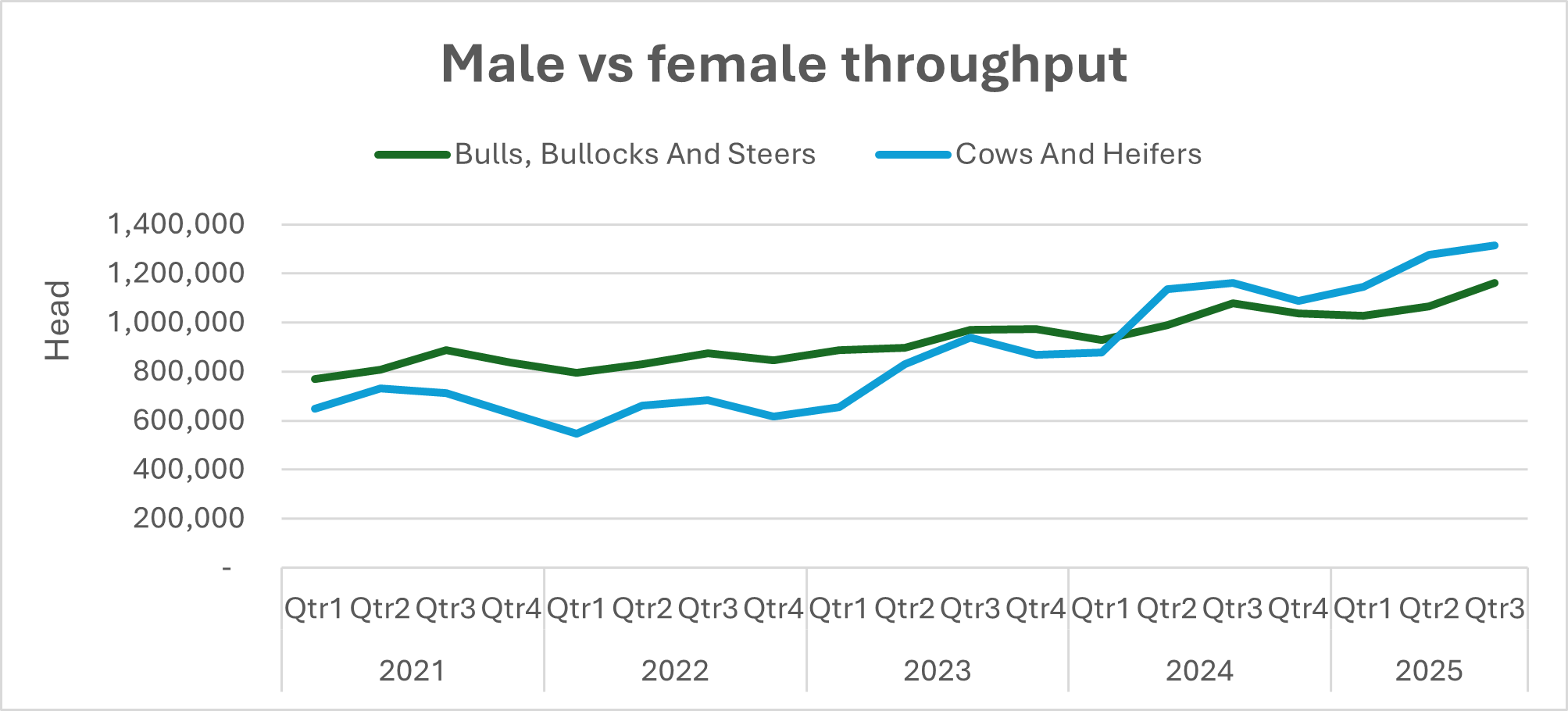
Source: ABS.
Despite this recent moderation, the structural improvements underpinning heavier cattle remain firmly in place. If seasonal conditions hold and feed availability remains strong, particularly in the north, average weights are likely to continue to long-term lifts, even as market dynamics influence short-term trends.
Attribute content to: Emiliano Diaz, MLA Senior Market Information Analyst
Information correct at time of publication on 11 December 2025.