Optimising maiden ewe fertility
Producer case study: David Counsell
Producer: David and Genevieve Counsell, ‘Dunblane’, Barcaldine QLD
Enterprise type: sheep (meat and wool); rangeland goats; agistment cattle
Flock/herd size: 10,000 merino sheep; 5,000 rangeland goats
Property size: 15,000ha
Land type(s): mostly Mitchell grasslands with some buffel, open woodlands and pockets of gidyea
Project overview
The Making Maidens Weight Producer Demonstration Site (PDS) explored ways to improve lamb marking rates from both maiden ewes and Mixed Age (MA) ewes in central west Queensland. Conception rates of the region’s maiden ewes and converting fetuses to lambs presents a challenge in a tough climate. The project’s two demonstration properties focused on pre-mating liveweight (maidens) and body condition scoring (BCS), supplementation of MA ewes, pregnancy scanning and udder assessment of ewes as practices to help improve their lamb marking percentage. As part of this initiative, individual animal data of over 10,000 ewes was collected using electronic identification (eID) in both large-scale commercial operations to highlight how this data can contribute to improved decision making.
David Counsell is a fourth-generation woolgrower operating a 15,000ha mixed grazing enterprise near Barcaldine, Queensland. David was one of two producers who helped develop and drive the PDS, having identified that maiden ewe fertility is a major limitation for western Queensland Merino producers.
Dunblane’s primary business objectives are to generate a >6% return on assets, diversify the income basis of the business and develop a profitable and sustainable agritourism business alongside the grazing business.
About the PDS
Alongside Peter Thomas, David championed this project, aiming to promote the adoption of science and best practice management in western Queensland sheep enterprises. David hoped that through access to small ruminant reproduction scientist Dr Gordon Refshauge (NSW DPIRD), this would build the collective wisdom of local sheep producers and provide opportunity to locally trial practices that are commonplace in southern sheep regions.
The PDS promoted key management practices such as pregnancy testing, wet and dry assessments (checking a ewe's udder at lamb marking to determine if she is currently rearing a lamb (wet) or has either lost her lamb or did not lamb (dry), and BCS in MA ewe mobs as indicators or drivers of reproductive performance. The PDS highlighted the importance of hitting target joining weights for maiden ewes pre-joining. By adopting these practices, David found lamb marking rates increased, generating more profit in the business.
David also saw the need to strengthen and broaden western QLD sheep producer networks, particularly between woolgrowers. The PDS was seen as a platform for sheep producers to discuss production, improve scientific understanding of factors influencing production and to share ideas and innovations for best sheep management in western QLD.
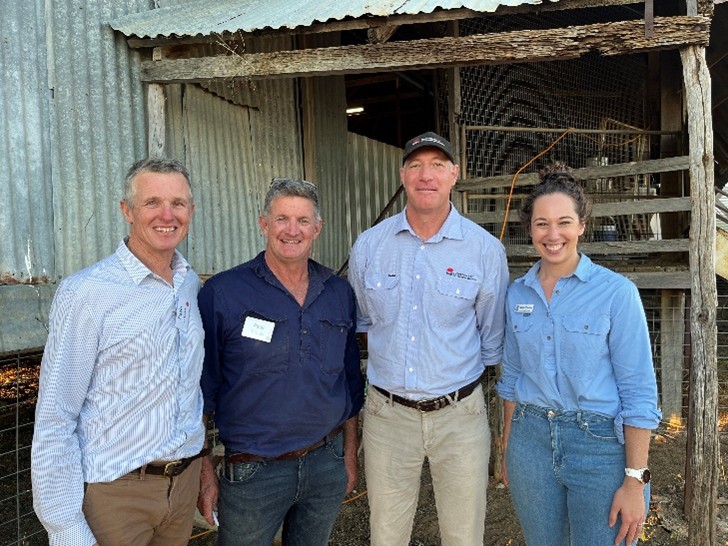
Image 1 David Counsell (left) was instrumental in the development of this PDS, engaging Ilfracombe producer Peter Thomas and Dr Gordon Refshauge (NSW DPIRD). The PDS supported by local DPI staff Millie Sheales (right) and Rhonda Toms-Morgan from ConnectAg (not pictured).
Management changes to improve maiden ewe fertility
Prior to this PDS, eID tags were already used at Dunblane and scanning results for pregnant/not pregnant recorded for each sheep. Following Dr Refshauge’s guidance on best management practices to improve maiden ewe and MA ewe fertility, several new practices have been adopted across the breeding flock at Dunblane:
- Body condition scoring MA ewes to identify ewes in lighter condition requiring supplementary feeding to improve condition score prior to joining. Condition scoring was shown to be critical in guiding the dry season feeding program. Prior to joining in October, David now drafts off and preferentially feeds low BCS MA ewes and low bodyweight maiden ewes to ensure higher scanning results.
- Identifying a target liveweight for maiden ewe joining and developing options for supplementary feeding of the maidens to reach this target.
- Supplementary feeding to increase or maintain body condition score of MA adults prior to joining was also implemented.
- Scanning for singles/multiple pregnancies and then preferentially managing twin-bearing ewes through a separate paddock allocation and targeted supplementation was implemented.
- Udder assessment at lamb marking (wet/dry and udder integrity) was adopted to select for ewes that successfully reared a lamb or detect ewes that failed to rear, allowing the option to remove the less productive ewes from the breeding flock.
- Whilst sheep were tagged with eID tags prior to the project (Figure 1), the scope of data collected in this PDS enabled development of comprehensive records of >5,000 individual ewes and their productivity. This improved the quality of selection decisions by identifying and culling poor performers and supported targeted management of individual sheep rather than mob-based management.
- Following a PDS webinar discussing genetic indicators and traits for fertility, Dunblane increased pressure on selection for high fertility Merinos from the use of Australian Sheep Breeding Value rams with focus on fertility breeding values.
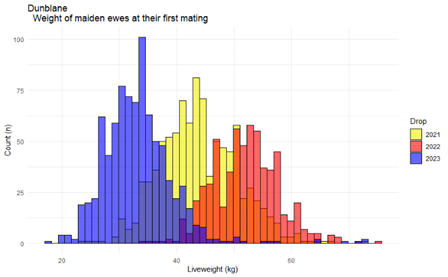
Figure 1 Liveweight distributions for each age group (drop; year of birth)
Impact of management changes
Connections between local growers and industry representatives strengthened the support available to western Queensland growers, boosting their confidence to trial new practices. David cites the establishment of a mobile phone WhatsApp group chat and a grower email newsletter as playing a key role in fostering a peer-to-peer group of sheep producers throughout the PDS. These tools provided the opportunity for producers to readily discuss approaches to management, technology and infrastructure.
Other benefits to Dunblane included trialling confinement (lot) feeding of the black tag (2024) weaners to improve weaner growth rates and ultimately set them up to perform as maidens in 2025.
Easy access to advice from Dr Refshauge and a southern nutritionist, and experiences from other growers in the WhatsApp chat gave David confidence to trial and review his weaner management system.
To improve the efficiency of husbandry tasks in the absence of reliable labour, this project has catalysed a myriad of on-farm productivity investments that have been made at Dunblane. Since the project’s inception, Dunblane has invested in panel eID readers, an auto drafter, an Optiweigh (sheep) unit to improve delivery of animals at saleable weight and new software to support data analysis. Through the PDS, David has gained valuable insights into how adopting new technologies can reduce the cost of production in western Queensland sheep enterprises. These tools not only reduce labour requirements but also provide timely information to guide decision-making and enable responsive management practices, ultimately improving flock fertility outcomes.
Challenges encountered during the project
Predation and seasonal conditions were a challenge at Dunblane over the course of the PDS, which ran from March 2023 to June 2025. These factors were large contributors impacting mortality and joining success, particularly in 2024 (Figure 2).
Despite substantial efforts to control predator numbers and implement exclusion fencing, wild dogs continued to impact lamb survival and marking percentages in 2024 and 2025. Additionally, high eagle pressure was observed in 2025 further contributing to lamb losses.
Season-wise, flooding in November 2023 created management challenges with fencing loss directly impacting the planned joining period. Rams remained joined to the ewes whilst fences were repaired. 2024 was a different story with well below average rainfall across the year into 2025. Analysis using the ClimateApp website indicated Barcaldine had experienced a 12-month period within the driest 13th percentile of years.
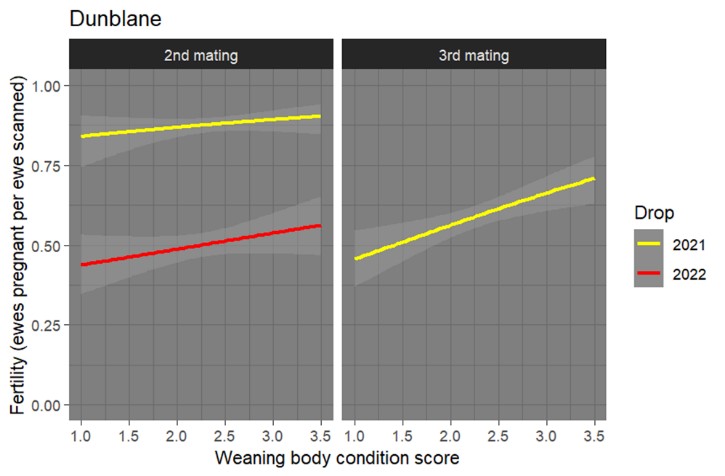
Figure 2 Weaning body condition score of the 2021 yellow tag and 2022 red tag ewes and their subsequent fertility rate (the number of pregnant ewes per ewe scanned). The light shading around the line of best fit is the confidence interval.
Where to now with your learnings from the PDS?
David sees value in a second PDS in the region, centred on how to effectively and confidently use grain supplementation to feed sheep to achieve.
Despite these challenges, David felt he had better control of levers impacting flock fertility, resulting in more sheep to sell and select from than he did prior to the PDS. Record keeping and using individual animal data has improved Dunblane’s business and drought resilience by enabling culling decisions to be made more readily, based on objective individual animal performance data. Ultimately, this will see Dunblane better retain more productive animals in the flock − contributing to a more productive flock, more profits and cash flow to the business in the good years, and enable a faster flock rebuild post drought due to the higher flock fertility.
Individual animal data collection and analysis continues to be part of Dunblane’s operational program to improve selection decisions that optimise ewe fertility. In the future, David is interested to see how artificial intelligence could speed up individual animal data analysis to reduce time spent in the office in order to get out in the paddock and refine the flock sooner.
Gaps in individual animal data highlighted the losses from predation throughout the project, so increased efforts to control predators will remain an important component of Dunblane’s sheep management.
David sees value in continuing to feed ewes to hit a body condition score target of 3 at the point of lambing and maiden ewes to reach a targeted joining weight of 42kg to improve joining outcomes in his maiden Merino hogget ewes. To support this, production targets, particularly when seasonal conditions are suboptimal.
This PDS was funded by Meat & Livestock Australia and supported by the Farm Business Resilience Program, ConnectAg, NSW Department of Primary Industries and Regional Development and Leading Sheep.